

Should You Paint Your Soffits Ceiling Color Or Wall Color?
If you’re currently remodeling and thinking about soffits, you’re probably wondering whether the soffits be painted the ceiling color or the wall color.
We hear our clients ask this question all the time and that’s exactly why we knew we needed to bring the discussion here.
Soffits are part of so many homes. They can be used as a decorative feature in certain places, but their practical purpose is typically to hide mechanicals, beams, and other necessary items that impact the function of your home.
When clients ask us what color their soffits should be, our answer is: “it depends!”
In order to simplify the decision, we have come up with a simple process that considers each individual soffit situation to help give more clarity on what will work best. We hope going through this will help you make the best decision for your own home too!
Affiliate Disclosure: As an Amazon Associate I earn from qualifying purchases. You should assume the owner of this website has an affiliate relationship and/or another material connection, to any suppliers of goods and services that may be discussed here and may be compensated for showing advertisements or recommending products or services, or linking to the supplier's website.
Table of Contents
What Is a Soffit, Exactly?
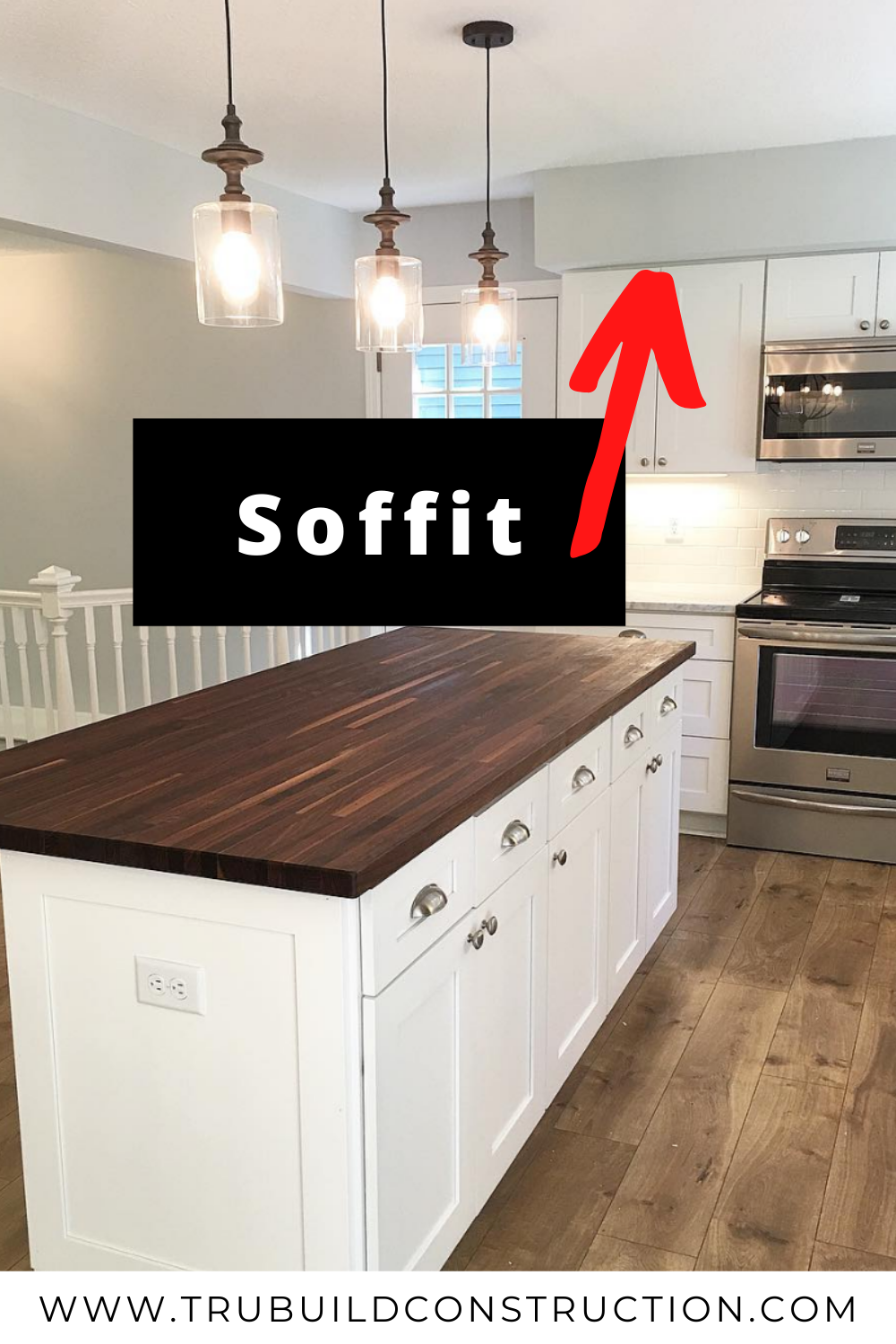
If you're not entirely sure what counts as a soffit versus a bulkhead, ceiling drop, or beam wrap, you're not alone - the terms get used pretty interchangeably in everyday conversation. A soffit is a horizontal or boxed-in surface, usually built to conceal ductwork, plumbing, electrical, or structural elements, that creates a lower section of ceiling or a boxed-out area along a wall. You'll see them most often above kitchen cabinets, in basements around ductwork, above bathroom vanities, or anywhere a beam or pipe needed to be hidden without removing it. Because a soffit has multiple visible surfaces - a bottom, and often one or more sides - deciding how to paint it is a little more involved than a simple wall or ceiling.

The Simple Process: Answer These Questions
Below we will walk you through a super simple process we use to help our clients decide if their soffit should be painted ceiling color or wall color.
All you need to do is answer the questions and it will move you forward toward a decision!
1. Is The Ceiling Textured Or Smooth?
The ceiling texture is the first thing we always consider. If the ceiling is textured (popcorn, knockdown, orange peel, etc.), then the decision is often simple - the soffits will be wall color. In this case, your decision is pretty much made, so skip over the rest of these numbered questioned and go on down to the next section.
If you have smooth ceilings, you have more available choices because there is no ceiling texture automatically differentiating the two surfaces. You’ll want to go onto the next question to help you decide.



2. Does The Soffit Tie Into Part Of The Flat Wall Surface?

If you’re moving on to question two, that means you have smooth ceilings and have more things to consider.
Now take a look at your soffit again. If your soffit runs along a wall and technically is flush with that wall, enough that it technically could be considered part of it, your soffit should then be painted wall color. This is often the case in kitchens with soffits above the cabinets and sometimes in situations where there is a beam and/or wing wall. The reason it needs to be painted wall color in this circumstance is because there would be no way to make a clean break between the two colors and having a line there would likely draw attention to the soffit and make it look like a mistake. Your decision is now clear and you can skip over question 3 to the next section.

If your soffit does not run flush with a wall at any point, then the options are still wide open for you to decide between ceiling or wall color, and hopefully your answer to the next question will help make your decision clear.



3. What Is The Height Of The Ceiling?
Since you have gotten this far, it means you have smooth ceilings and your soffit does not tie into or run flush with part of a wall.
The next thing you will want to consider is the ceiling height in the room where the soffit is located.
In our opinion, if the tallest point in the ceiling is less than 8 feet tall (thus the soffit is significantly lower than that) we would lean toward having the soffit be ceiling color. Especially in basements of older homes where ceilings and soffits can sometimes get really low, having the soffits be ceiling color can help them blend into the space can make the room feel brighter. With the soffit being closer to eye level, it is nice to not draw extra attention to them.
That means if your ceiling height is 8 feet tall or higher, we would recommend the soffit be painted wall color. This is a great way to accentuate the height of the room and help the soffit blend into the upper part of the wall.

Now That You Know Which Color You’ll Be Painting Your Soffit…
Should The Whole Soffit - Sides And Bottom - Be The Same Color?
If you’re asking us, then our answer is a resounding - YES!
No matter which side of the soffit paint debate you landed on at the end, either wall or ceiling color, painting the entire soffit the same color is important in making sure it looks intentional and cohesive.
What If There Are Multiple Soffits In The Same Space?
Whether you paint all soffits the same or not is up to your discretion, but in places like basements with many soffits in different parts of the space, we often will use the above criteria to determine the color for each individual soffit. We find that when the soffits aren’t all in the same line of sight, having them be different won’t be noticeable, so you can do what you think looks best.


Real-World Examples by Room
To make this even more concrete, here's how this process tends to play out in the rooms we get asked about most:
Kitchens: Soffits above upper cabinets almost always run flush with the wall, so wall color is the typical answer here (per Question 2). If your kitchen soffit is a standalone box that doesn't touch a wall, revisit Questions 1 and 3.
Basements: This is where you'll most often run into low ceiling height with multiple soffits scattered around ductwork and beams. Ceiling color is common here specifically to keep the low points from standing out and to help the room feel a bit taller and brighter overall.
Bathrooms: Soffits above vanities or tubs are frequently flush with a wall (again, wall color), but a standalone soffit in a bathroom with a smooth, taller ceiling can go either way depending on your answer to Question 3.
Textured ceiling homes (older builds): If your whole home still has popcorn or knockdown texture, you'll likely land on wall color across the board per Question 1, which also happens to simplify your paint shopping since you're really only managing one color transition throughout the house.
What About Color Drenching?

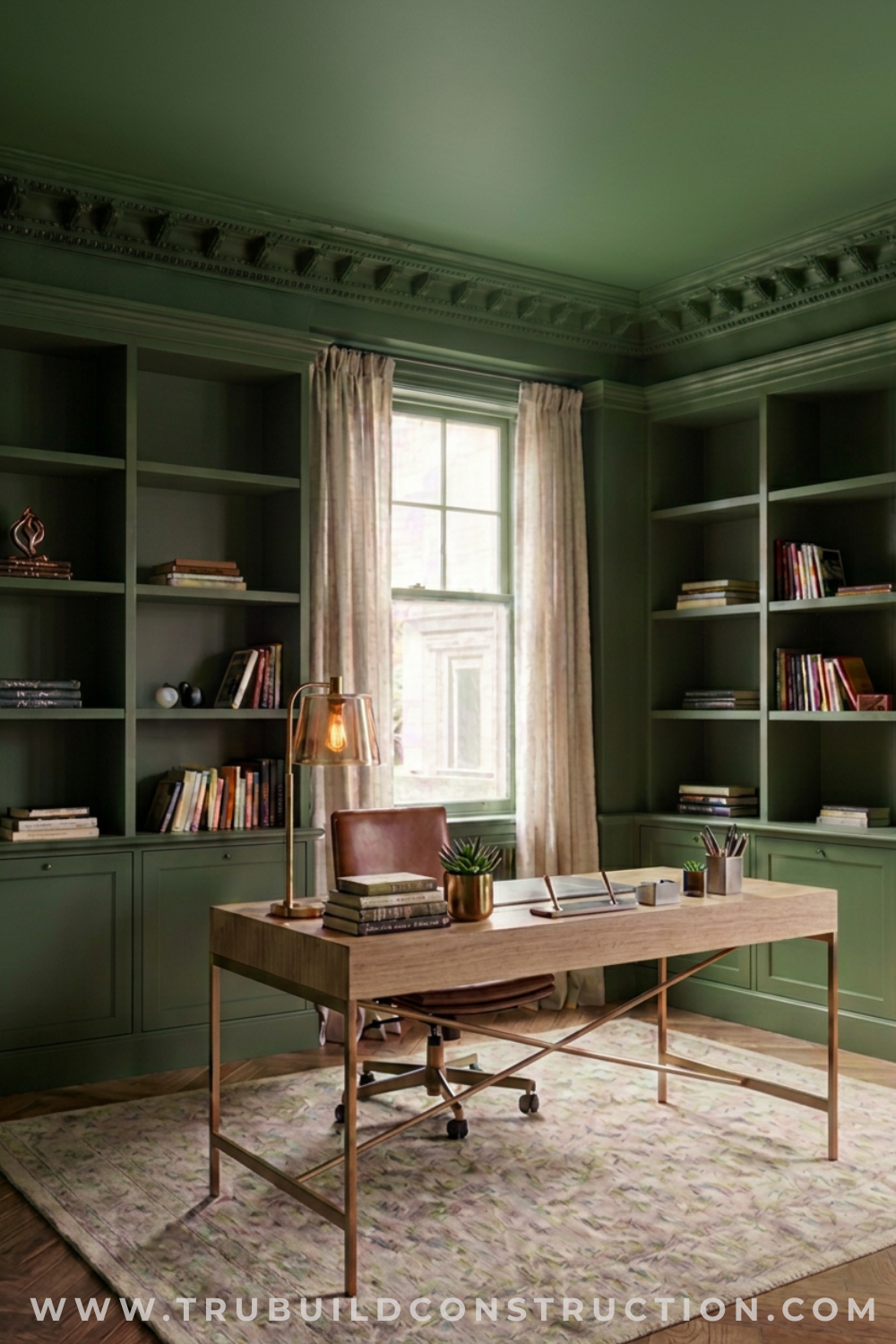
If you're drawn to the color drenching trend - painting walls, trim, ceiling, and sometimes even doors all in the same color - soffits fit right into that approach with the least fuss of all: paint them the same color as everything else.
This sidesteps the whole decision process above entirely, since there's no wall-vs-ceiling color line to worry about matching in the first place. It's a great option if your soffit doesn't cleanly fall into wall or ceiling per our process above, or if you just want a bold, cohesive look that reads as one continuous envelope of color rather than a room built from separate surfaces.
A few things worth knowing if you're considering this route for a room with soffits:
A drenched room usually looks best with one consistent sheen across walls, trim, ceiling, and soffit, rather than the sheen variation we recommend elsewhere in this article for a traditional wall/ceiling split. Since there's no color break to help disguise a sheen difference, an inconsistent sheen will actually stand out more in a drenched room, not less.
Soffits tend to disappear beautifully in a drenched room. Since one of the main goals of our 3-question process is to help a soffit blend in and look intentional, color drenching often achieves that same goal even more completely - there's simply no seam for the eye to catch on.
This is a great solution for oddly-shaped or multiple soffits that don't have a clean answer. If you found yourself going back and forth between wall and ceiling color for a tricky soffit, drenching the whole room in one color removes the debate altogether.
It's a bigger commitment than a standard two-tone room, so it's worth testing your chosen color as a large sample in the actual room, in different light throughout the day, before committing to painting every surface the same shade.
Choosing the Right Paint Sheen for Soffits
Once you've settled on a color, sheen is the next decision - and it's one that's easy to overlook. As a general rule:
If you're matching ceiling color, use the same flat or matte finish you used on the ceiling, so the transition is seamless in both color and light reflection.
If you're matching wall color, it's fine to use the same sheen as your walls (often eggshell or satin), but keep in mind that soffits catch more indirect light and shadow than a flat wall does, so a slightly lower sheen than you'd expect can sometimes look better in person than it does on a paint chip.
For soffits in high-moisture rooms like kitchens and bathrooms, consider a satin or semi-gloss finish regardless of which color you land on, since it holds up better to cleaning and humidity than a flat finish will.
Painting Tips for a Clean, Crisp Line
Since a soffit almost always creates a visible seam or corner where two colors (or two sheens of the same color) meet, getting a crisp line matters more here than on an open wall. A few tips:
Tape generously and press the edges down firmly before painting, especially along any texture or slightly uneven drywall seams, to prevent bleed-through.
Cut in by hand with an angled brush along the transition line rather than relying on tape alone for the most precise result, especially on longer runs.
Let the first color fully cure before taping over it for the second color, to avoid pulling up fresh paint when you remove the tape.
Use a paint edger tool if you're not confident cutting in freehand - it can make a straight, soffit-length line much more manageable, especially along ceiling height soffits that are harder to see clearly while you work.
DIY vs. Hiring a Painter
Painting a soffit is one of the more approachable DIY painting projects, especially if you're already repainting the adjoining wall or ceiling and have the tools and paint on hand. Where we'd suggest bringing in a professional: very high or vaulted ceiling soffits that require significant ladder or scaffold work, soffits with multiple angles or a lot of trim detail where cut lines get complex, or if you're already hiring a painter for a larger room and it makes sense to fold the soffit into that same job for a consistent finish.
Common Mistakes to Avoid
Mixing wall color on one side of a soffit and ceiling color on another. As covered above, keep the whole soffit (all visible faces) one consistent color.
Ignoring sheen consistency when matching ceiling color. A glossier sheen on a soffit that's supposed to blend with a flat ceiling can make it stand out more, not less.
Skipping the "does it touch a wall" check. This is the detail people misjudge most often - even a soffit that looks mostly freestanding can have one section that's flush with a wall, which should guide your decision for the whole soffit.
Painting soffits before confirming your ceiling and wall colors are fully finalized. Since the soffit color depends entirely on your answers above, it's a good idea to paint soffits last in a room's paint sequence.
Frequently Asked Questions
-
These terms are often used interchangeably in home renovation, especially in kitchens - both generally refer to a boxed-in ceiling or wall section used to hide mechanicals, beams, or ductwork. Regional terminology can vary, so if a contractor or product uses one term over the other, it's usually referring to the same type of feature.
-
It's completely fine for soffit color to be decided independently, room by room, using the same process each time - there's no requirement that every soffit in your home matches.
-
Not necessarily, but it's worth considering, especially in kitchens and bathrooms where moisture and cleaning make a slightly higher sheen a practical choice, even if it wasn't your first instinct based on color alone.
-
Trim is generally treated as, well, trim - often painted in your standard trim color (commonly white) regardless of which color you choose for the flat soffit surfaces, similar to how trim is treated elsewhere in a room.
-
Some homeowners do choose to treat a soffit as an intentional design feature with a contrasting or accent color, especially in more modern or eclectic design schemes. Our process above is really meant to help it blend in and look intentional if that's your goal - if you want it to stand out instead, that's a valid design choice too, just a different goal than most of our clients are working toward.
-
Yes - in fact, soffits tend to disappear especially well in a color-drenched room, since painting walls, trim, ceiling, and soffit all the same color removes the seam or transition line that our 3-question process is otherwise trying to plan around.
Conclusion
Deciding whether to paint your soffits to match the wall color or the ceiling color can sometimes feel confusing. Using the process above we have seen our clients have a much easier time coming to the best decision for themselves on what color to paint their soffits. We hope you found our take on the decision process helpful as you consider what you might do in your own home!
Now I want to hear from you - Do you have soffits in your home? What color did you decide to paint them and why? Let us know in the comments below!



Discover why a cozy minimalist bedroom can genuinely help you sleep better, plus 35+ affordable finds for bedding, lighting, and decor that create a calm, restful space.