
Our Best Tips For Hanging Pendant Lights On A Vaulted or Sloped Ceiling (Complete Guide)
If you’re planning to hang pendant lights on a vaulted or sloped ceiling, you have come to the right place. We absolutely love tall ceilings, and vaulted or sloped ceilings can make a space look bright and open while also allowing some great opportunities for drama in a home.
While the tall ceilings make a great statement, they can also bring more complications when it comes to selecting light fixtures. The taller height in the space and hanging lights from a sloped angle can mean it takes a little more planning to find the perfect fit.
Below, we're walking through everything you need to know - from the anatomy of a sloped-ceiling-compatible pendant, to sizing, spacing, common mistakes, and the exact products we recommend - so you can shop with confidence and get a result that looks intentional, not improvised.
Affiliate Disclosure: As an Amazon Associate I earn from qualifying purchases. You should assume the owner of this website has an affiliate relationship and/or another material connection, to any suppliers of goods and services that may be discussed here and may be compensated for showing advertisements or recommending products or services, or linking to the supplier's website.
Anatomy Of A Pendant Light For A Vaulted Or Sloped Ceiling

It is important to understand the different parts of a sloped ceiling compatible pendant light to make sure it is clear what makes this type of pendant light unique for this purpose.
Canopy - The canopy is the piece that covers the electrical box and wires that run from where the bulb is located, through the downrod and adapter and into the ceiling above the light.
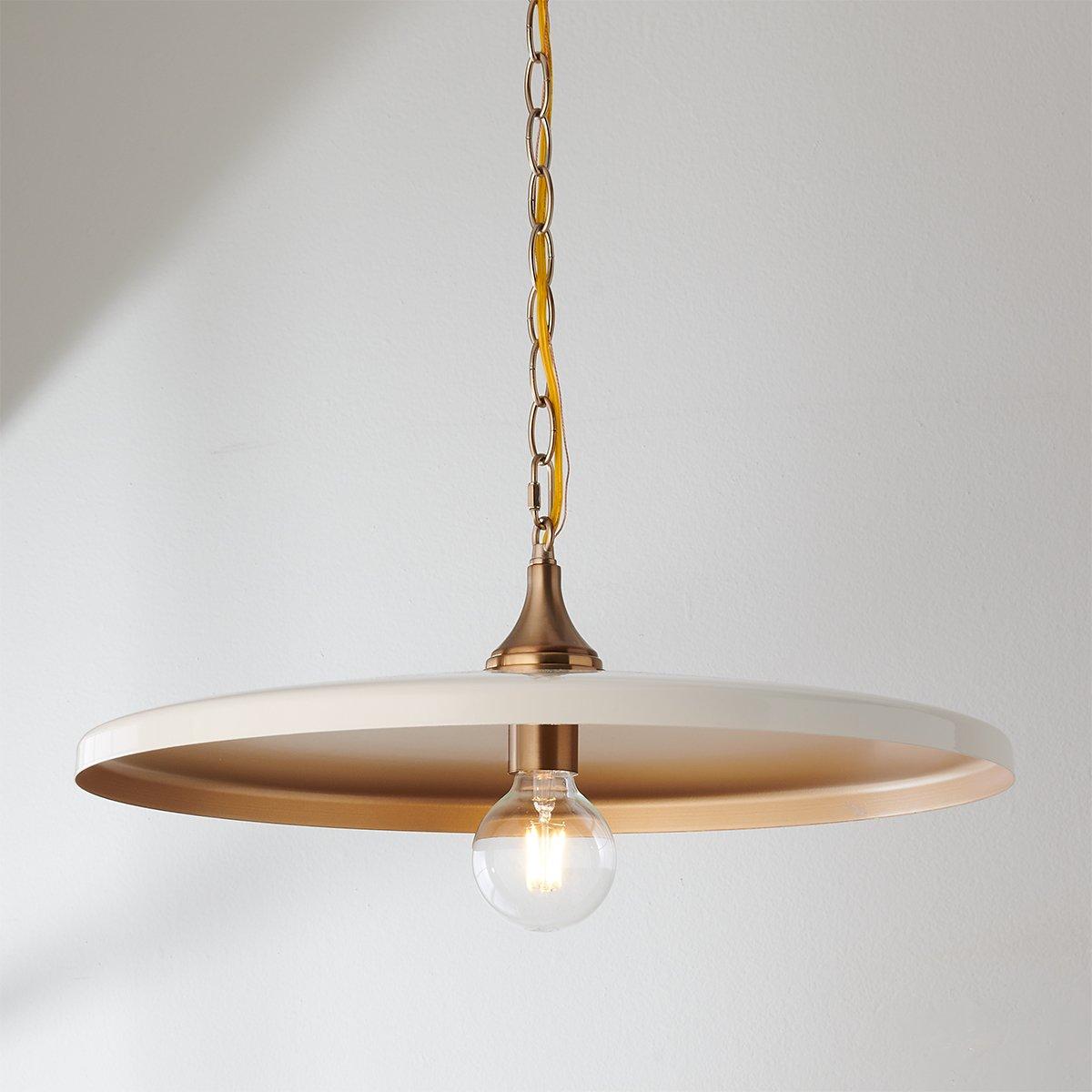
Adapter - The adapter on a vaulted or sloped ceiling compatible pendant light is the piece that connects the canopy to the downrod and can be adjusted to the necessary angle to allow the pendant light to hang straight down. Without an adjustable piece here, a light with a downrod would stick straight out from the sloped angle of the ceiling. Sometimes vaulted or sloped ceiling compatible pendant lights hang by cords or chains and that allows them to hang at the correct angle without another type of adapter.
Downrod or Chain - The downrod or chain is the piece of the pendant light that allow the length of the fixture to be adjustable. The wires also run through the downrod or chain in order to get up to the electrical box in the ceiling to have power to the light.
Shade - Depending on the pendant light, there can be open bulbs or a variety of different kinds of shades made from glass, fabric, metal or other materials. Inside of the shade is the bulb or bulbs that light the fixture.
Knowing these four parts by name makes it so much easier to shop - and to talk to an electrician if you need to bring one in. It also helps when you're reading product listings, since manufacturers describe "slope ceiling adapters" and "canopy kits" using these exact terms.
Choosing Pendant Lights For A Vaulted Or Sloped Ceiling
There are two important things to look for when searching for pendant lights to install on a vaulted or sloped ceiling:
Pendant Lights Must Be AdaptAble To A Vaulted or Sloped Ceiling -
The very first step you need to take is make sure to choose pendant lights that are adaptable to a vaulted or sloped ceiling. What that means is that the light can be adjusted to allow the canopy to be attached to a sloped portion of the ceiling with the adapter being manipulated to create an angle which lets the pendant light hang straight down from the ceiling.
Overall Hanging Length of the Pendant Light Cord, Chain and/or Downrods -
When dealing with a vaulted or sloped ceiling, you’ll often have a taller than average height measurement to consider. Make sure to measure the height of the space to ensure there will be enough cord, chain and/or downrods to allow the pendant light to hang at your desired height.
How to Calculate the Right Hanging Height
This is the step people skip, and it's the one that causes the most regret. A pendant that looks perfect in a photo can feel awkward in your space if it's hung too high or too low. Here are the general rules of thumb we use:
Over a kitchen island or dining table: Hang the bottom of the pendant 28–34 inches above the surface (table or countertop).
In an entryway or open area with foot traffic: Keep the bottom of the pendant at least 7 feet (84 inches) from the floor so no one bumps their head.
In a stairwell or two-story foyer: The general guideline is to hang the pendant so it doesn't extend below the top of the surrounding railing, and to make sure it can be lowered for bulb changes without a two-story ladder (more on this below).
Because vaulted and sloped ceilings vary in height across the room, always measure at the exact point where the fixture will be installed - not just the tallest or lowest point of the room. A difference of even a foot in ceiling height can mean you need a longer downrod or an extra length of chain.
Pro tip: Before you buy, measure from the ceiling to your desired final height, then add a few extra inches of "wiggle room" for the canopy and adapter hardware. It's much easier to have a downrod that's slightly too long (you can often have it cut or use a shorter one) than to find out you're a few inches short.
How To Make A Pendant Light Vaulted or Sloped Ceiling Compatible
If you have your eye on a specific pendant light and it doesn’t appear to come compatible with a sloped or vaulted ceiling, there may be another way to make it work.
There are options available for sloped ceiling adapters that come in various finishes and sizes. The adapter comes with two threaded ends, one that screws into the canopy and the other that would attach to the downrod.


Some of the adapter kits can also be a nice option if you have a light that hangs by a chain or cord but you would actually prefer the aesthetics of a downrod.


Before you buy an adapter, double-check three things: the thread size (usually 3/8" or M10 - check what your fixture and junction box use), the maximum angle the adapter can accommodate (most cover up to 45–60 degrees of slope), and the finish, since an adapter in the wrong finish can be surprisingly noticeable against a canopy.
How To Make Two or More Pendant Lights Hang Evenly On A Vaulted or Sloped Ceiling

When planning to hang two or more pendant lights level with each other on a vaulted or sloped ceiling, it is good to think ahead to ensure the outcome will be what you’re envisioning.
Unlike hanging pendant lights from a flat ceiling, a sloped or vaulted ceiling can mean that lights installed just a foot or more away from each other could potentially need to have significantly different lengths of chain or downrod in order to have the bottom of the lights hang at the same height.
A good example of when you may want two or more pendants level and in line with each other is over a kitchen island. This specifically becomes an issue when they will be in a line along where the ceiling slopes up or down. The problem in this situation comes when the lights are installed at different heights and you’re left with the task of figuring out how to get them level to one another.
When we have encountered this issue with clients in the past, the most complicated problem to solve came up when the pendant lights had downrods. The downrod makes it more complicated to get the lights even because most pendant lights with downrods come with a selection to choose from in certain lengths such as 24”, 12” or 6”. Unfortunately, it isn’t always possible to get the lights even with those specific dimensions of downrod. In this case, we have learned to become creative.
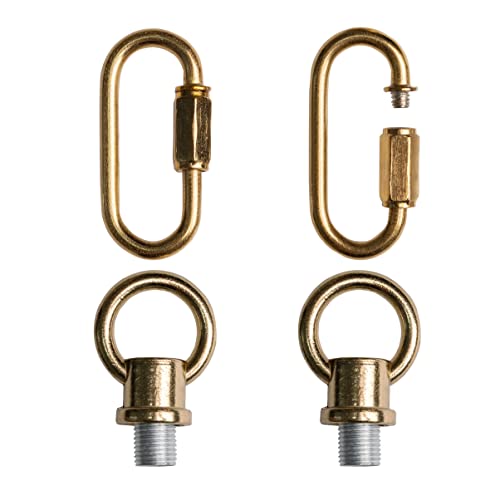
A more simple way to adjust the length the pendant lights hang from the vaulted or sloped ceiling is to add a section or even just a couple pieces of chain. The chain lengths offer the ability to adjust the length by an inch or a few inches instead of 3-6” or more that the downrod pieces allow.

If you decide to go this route, we have a few recommendations:
First, we would say if you add chain to one, it makes sense to add it to all in the row. This is to ensure it looks like it was intentional and not a mistake. We would use the same length of downrod for all of the lights and then have the chain make up the difference in height between them.
Our next recommendation would be to add the chain at the top of the pendant light, near the canopy, because the lights will likely have different amounts of chain and it will be less noticable to have the difference closer to the ceiling. This allows the aesthetics of the lights to be similar closest to your line of sight, and the lowest part of the pendant light to all be downrod.




One more tip: if you're mixing chain and downrod on the same fixture, take a photo of the finished install and stand back at normal viewing distance (not right underneath it) before you commit to the final wiring. Small differences that feel obvious up close often disappear once you're viewing the lights from where you'll actually sit or stand day to day.
Downrod vs. Chain vs. Cord: Which Is Right for Your Ceiling?
We get asked this a lot, so here's a quick side-by-side to help you decide:
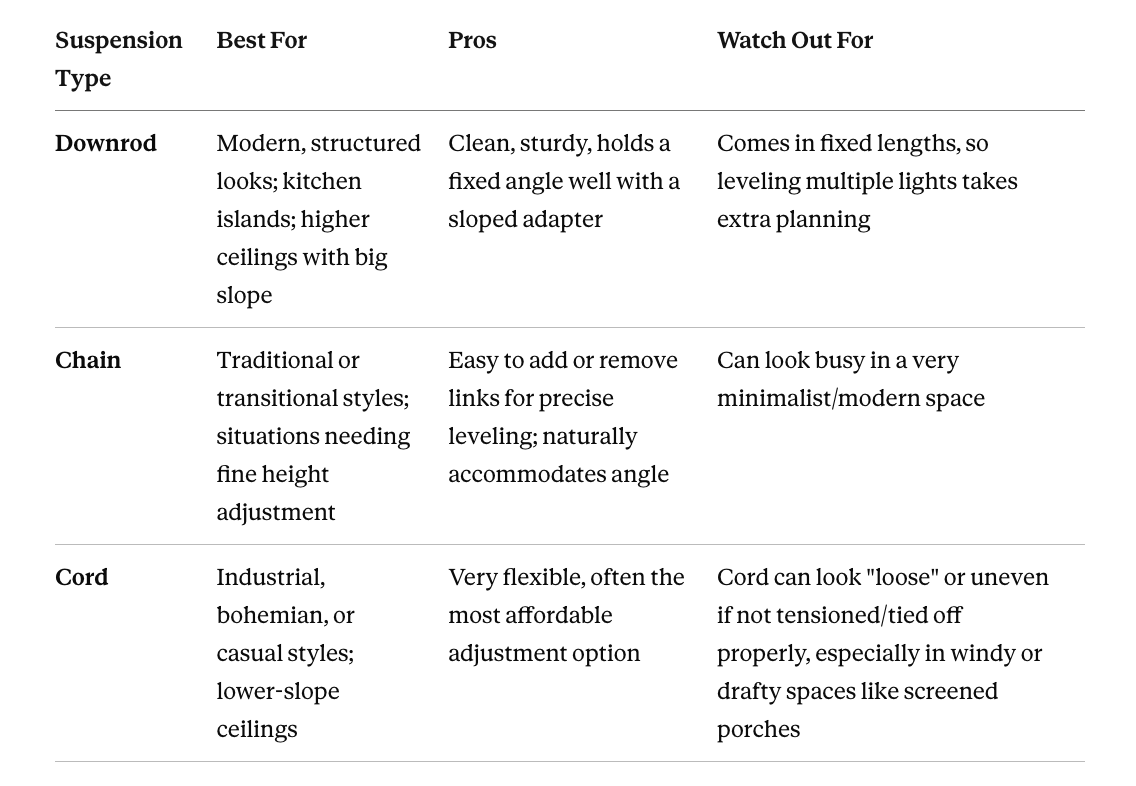
If your ceiling has a steep slope (think a true cathedral ceiling), a downrod with a quality sloped adapter is usually the most stable-looking option. For gentler slopes, chain or cord can often be hung compatible with just the adapter built into the fixture, no extra hardware needed.
Common Mistakes to Avoid
Not accounting for the slope when measuring. Always measure at the exact point of installation, not an average of the room.
Buying a fixture before checking adapter compatibility. Some canopies aren't designed to accept an aftermarket sloped adapter at all - check the fixture's specs or reviews first.
Forgetting bulb access. On very tall or vaulted ceilings, make sure you have a plan (a tall ladder, an extendable bulb changer, or a fixture that lowers on a pulley) before you fall in love with a design that's hard to reach.
Ignoring fixture weight limits. Chains and hook hardware are rated for specific maximum weights - always check that your fixture's weight (glass shades add up fast) is within the rating.
Skipping the "stand back and look" test when hanging multiple pendants - small unevenness is far more noticeable up close than from a normal viewing distance, but it should still look level from where people actually stand or sit.
Assuming all "high ceiling" fixtures are sloped-ceiling compatible. These are two different specs - a fixture can have a long downrod for a tall flat ceiling without having an adjustable adapter for an angled one.
A Quick Note on Safety and Electrical Work
We love a good DIY project, but a few things are worth saying plainly: working on a vaulted or high ceiling often means working from significant heights, and any time you're opening up wiring, there's a risk of shock if the power isn't properly shut off at the breaker first. If your project involves running new electrical, moving a junction box, or you're not fully comfortable on a tall ladder or scaffold, it's worth hiring a licensed electrician for the installation - especially for stairwell and great-room ceilings where a fall or a wiring mistake carries real consequences. Swapping hardware like a sloped adapter onto an existing, already-wired fixture is a much smaller job than a new install, but when in doubt, it's always fine to call in a pro for the electrical portion and handle the design and shopping yourself.
Styling Ideas by Room
Kitchen Island: Two or three matching pendants in a row is the classic look. Stick with fixtures 20–30% narrower than the pendants you'd use over a dining table, since islands are viewed up close and from multiple angles.
Dining Room: A single statement pendant (or a cluster of 3 smaller ones) centered over the table draws the eye up into the vault and makes the whole room feel more dramatic.
Entryway or Foyer: This is where vaulted ceilings really shine. A single oversized pendant or a tiered chandelier-style pendant can anchor a two-story space beautifully - just double-check your access plan for bulb changes.
Stairwell: Because the ceiling height changes as the stairs rise, this is one of the trickiest (and most rewarding) spots for a sloped-ceiling pendant. A single elongated fixture, or a cluster hung at graduated but intentional heights following the stair line, both read as designed rather than accidental.
Primary Bedroom or Reading Nook: A smaller-scale pendant on a chain with a sloped adapter softens a vaulted bedroom ceiling and adds a more intimate, less "great room" feel.
Budgeting for Your Project
Costs for this kind of project vary quite a bit depending on your approach:
Sloped ceiling adapter alone: roughly $10 - $30, if your fixture just needs the hardware
Extension rods, chain, or hook ring kits: roughly $10 - $40
The pendant light fixture itself: anywhere from $40 for a simple single pendant to several hundred or even thousands of dollars for a designer or multi-light statement piece
Professional electrician installation (if needed): typically $100 - $300 per fixture depending on your area and whether new wiring is required
Budgeting a little extra for adapter hardware up front can save you from a returned fixture (and a second round of shipping) down the line.
Where to Shop for Vaulted and Sloped Ceiling Compatible Pendant Lights
Wayfair - Huge Selection of Vaulted and Sloped Ceiling Compatible Pendant Lights!
Wayfair is one of the absolute best places to find a vaulted or sloped ceiling compatible pendant light. There is a huge selection available with designs for every aesthetic, budget or vision. The search function is one of the biggest selling features for why we love to shop there. It helps you filter out only the options that will work for you and your space with options like “sloped ceiling adaptable” and “high ceiling compatible”.
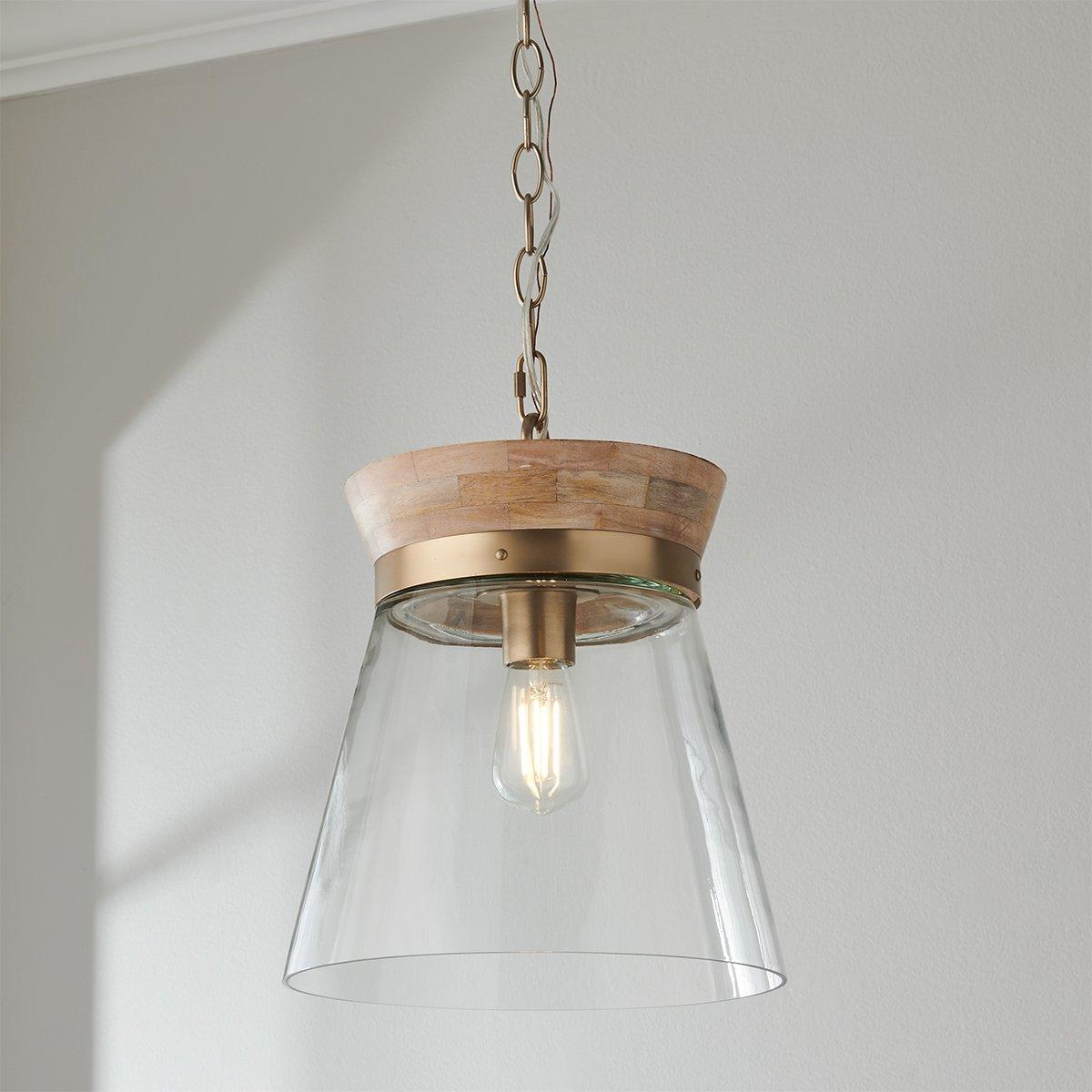
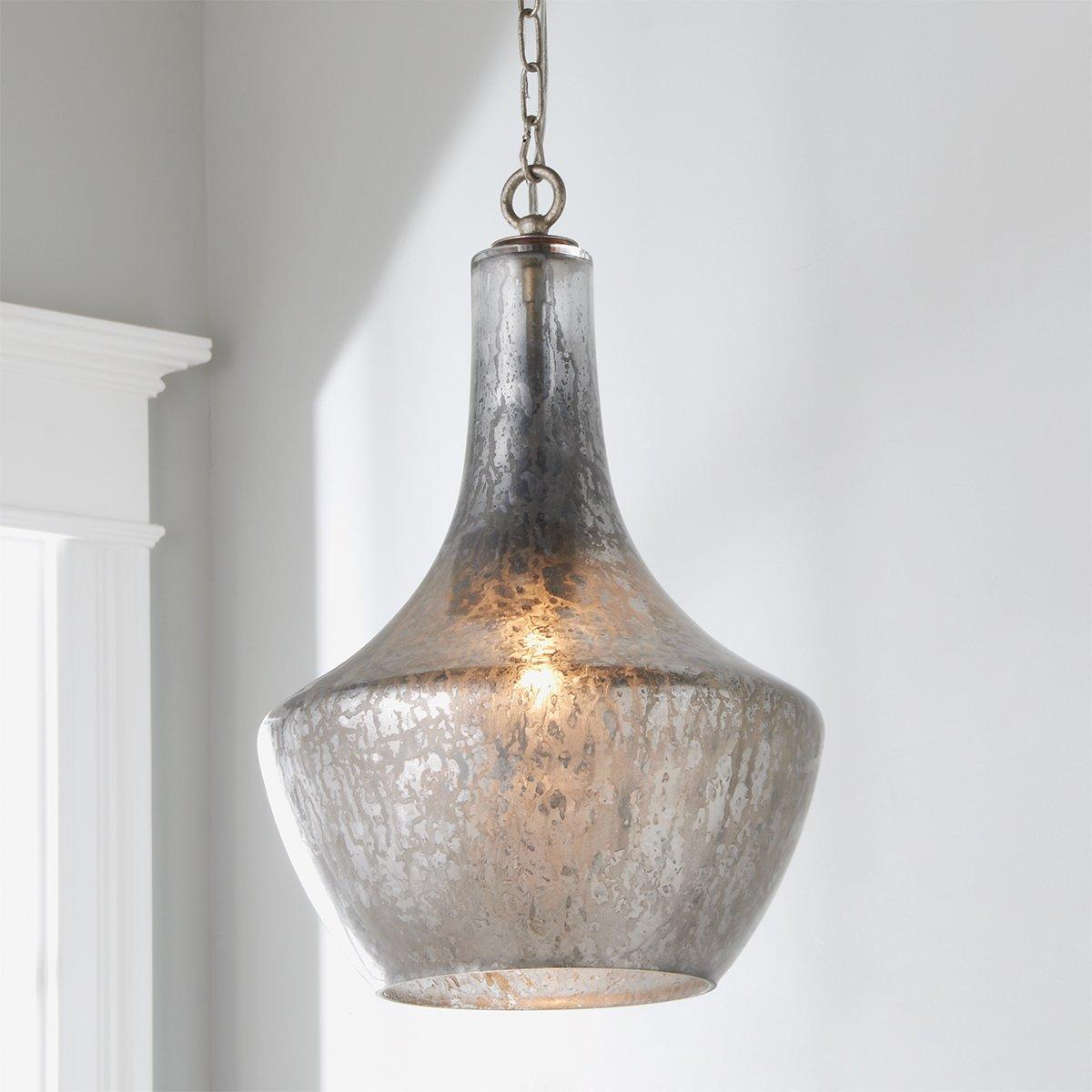
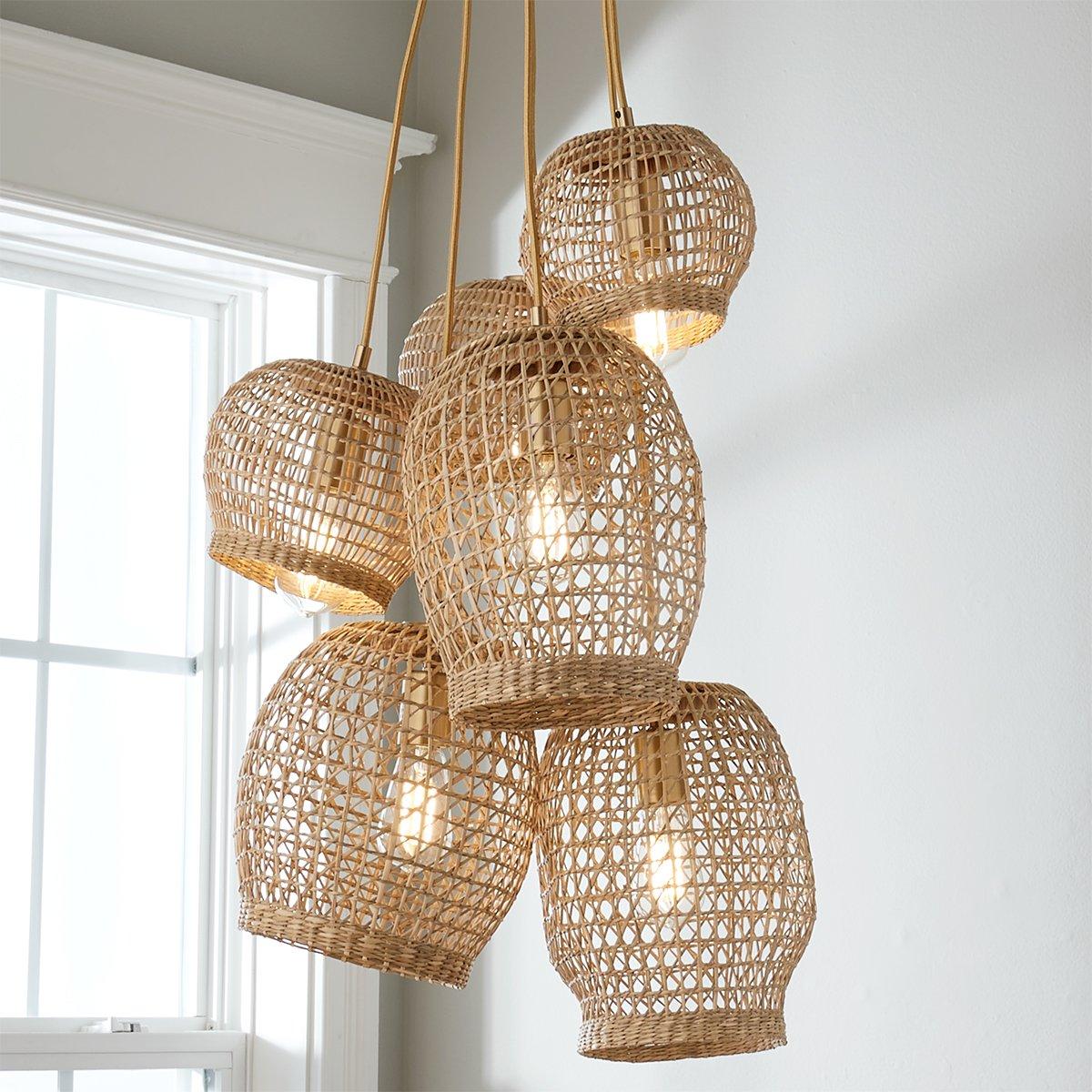
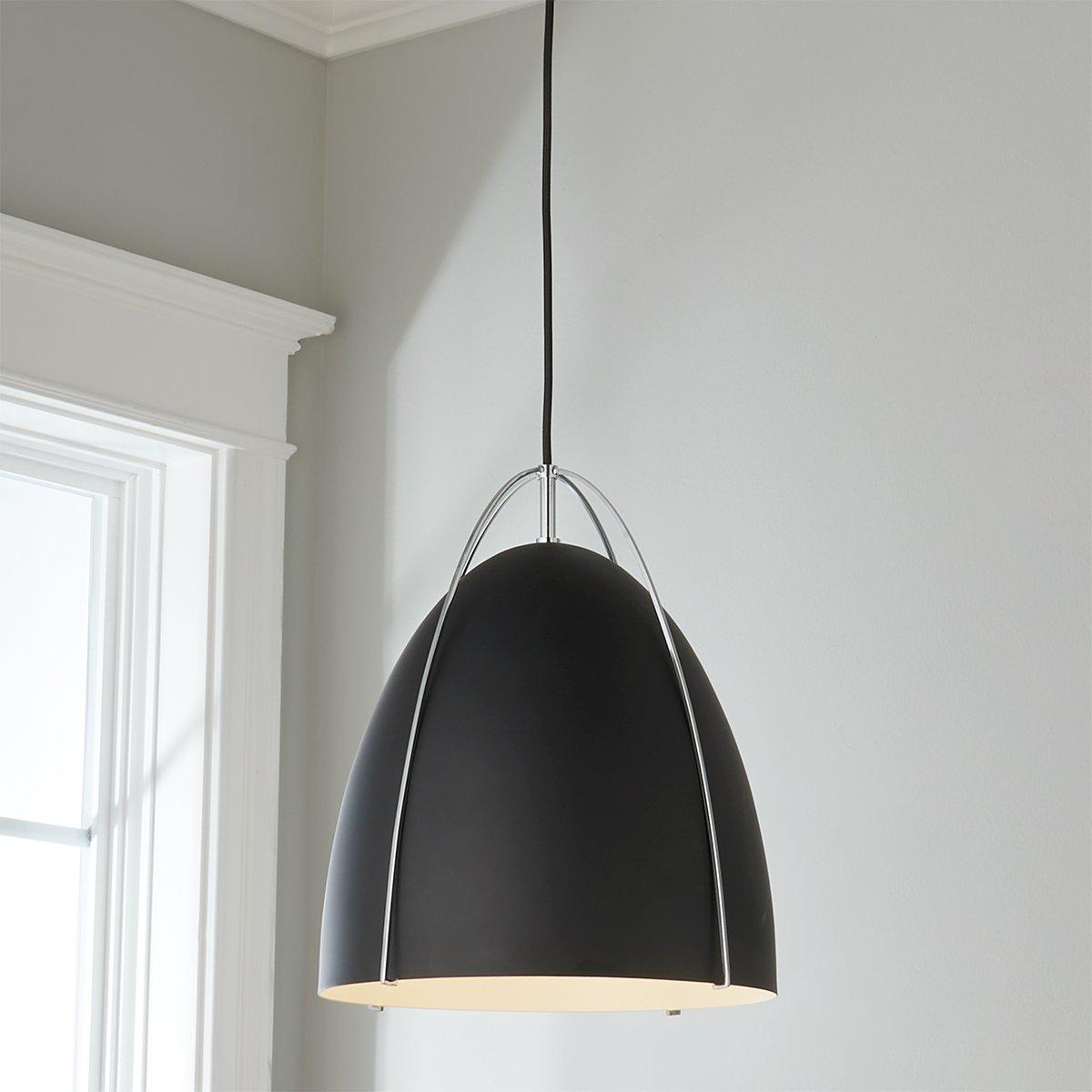
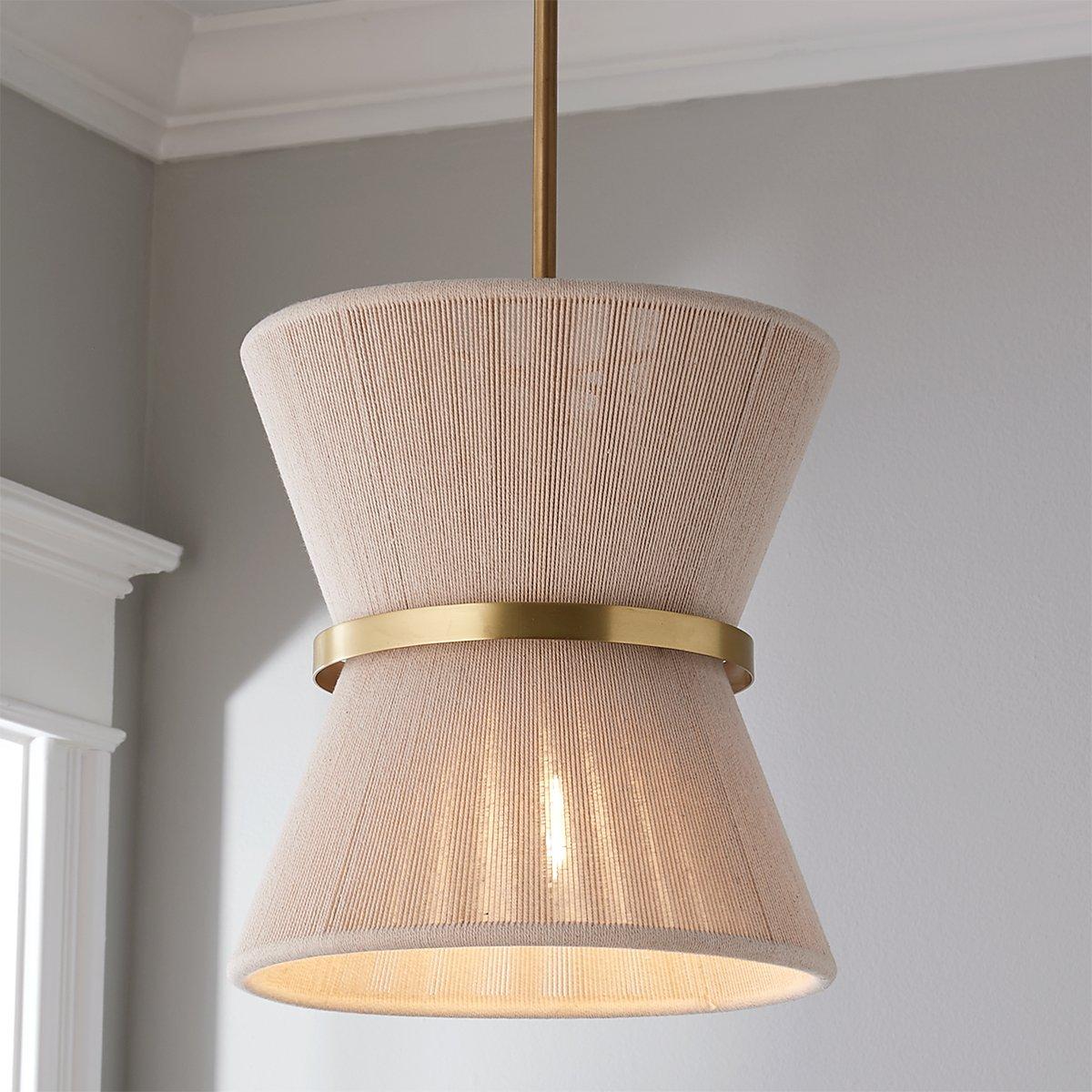
Shades Of Light - A Stunning Curated Collection Of Vaulted and Sloped Ceiling Compatible Pendant Lights
If you are someone who is always on-trend and wanting to see a beautiful selection of current, modern pendant lights for your home, Shades of Light is the perfect place for you.
Amazon - Vaulted and Sloped Ceiling Pendant Lights Galore!
Without a doubt, Amazon is a great choice to search for vaulted and sloped ceiling compatible pendant lights! With nearly endless options for designs and an awesome selection available in all price points, you can feel confident that your new pendant lights are waiting for you on Amazon!
Frequently Asked Questions
-
Most can, with the right adapter - but it depends on the canopy design. Some fixtures have a canopy that's built to accept a swap-in sloped adapter, while others (especially very low-profile flush-mount-style canopies) may not have room for the hardware. Check the manufacturer specs, or reach out to them directly, before buying an adapter for a fixture you already own.
-
Most standard adapters accommodate somewhere between 0 and 45–60 degrees of slope. If your ceiling is steeper than that, look specifically for adapters marketed for "steep slope" or cathedral ceilings, since coverage varies by product.
-
If you're just swapping hardware on an existing, already-wired fixture and you're comfortable on a ladder, many people do this themselves. If it involves new wiring, moving a junction box, or working at a significant height you're not comfortable with, we'd recommend hiring a licensed electrician.
-
Measure from the ceiling (at the exact point of installation) down to your desired final fixture height, then subtract the length of the fixture itself and the canopy/adapter hardware. Round up rather than down if you're unsure - many downrods can be swapped for a shorter length more easily than extended.
-
Yes, and it's actually one of the best tricks for leveling multiple pendants on a sloped ceiling. Just try to keep the visual transition consistent across all the fixtures in a row, and place any added chain near the canopy so it's less noticeable.
-
Adapters are generally universal within a given thread size (commonly 3/8" or M10), but always double-check your fixture's threading and weight before purchasing to make sure everything is compatible.
-
This varies by product - always check the manufacturer's stated maximum weight rating and compare it to your fixture's total weight (shade, bulbs, and hardware combined) before installing.
Conclusion
Vaulted and sloped ceilings are a beautiful design feature for any home. When considering lighting, it is important to keep in mind the unique qualities that a vaulted or sloped ceiling offers, along with the extra considerations for the height difference and angle at which pendant lights may have to hang. Using the tips we shared above - from understanding the anatomy of a sloped-ceiling pendant, to calculating hanging height, choosing the right adapter, and avoiding the most common mistakes - we are confident that you'll be able to find the perfect pendant lights for your vaulted or sloped ceiling to fit your style and budget.
Now we want to hear from you! What area of your home has a vaulted or sloped ceiling, or would you like to have a vaulted or sloped ceiling? Let us know in the comments below.





Struggling to find a small vanity that actually fits a vessel sink? Here's how to get the sizing, height, and style right - plus our favorite picks, both with and without the top included.